Showing posts with label Lupine Publishers. Show all posts

Saturday, 26 August 2023

Prevention of Negative Impact of Pesticides and Other Toxic Substances on Reproductive Function of Animals

 Introduction

In acutely facing the problem of remote consequences of influence on an organism of chemical substances, impact on reproductive function is important. In recent years, in farms and private farms specializing in the cultivation of cattle and small cattle, as well as rabbits, there are violations of reproductive function, manifested in infertility and spontaneous abortions, pre - and postimplantation developmental delay, physiological and behavioral changes in the offspring, malformations and transplacental effects, and often their etiology remains unclear. Our long-term production and experimental studies allow us to conclude that one of the leading factors in the development of these violations is the unfavorable environmental situation in many regions of Uzbekistan as a result of various anthropogenic influences, including: the significant use of chemicals to protect plants and animals from pests and diseases, as well as other toxic substances. Currently, the most widespread as a means of protection of plants and animals from various pests have synthetic pyrethroids (cypermethrin, esfenvalerate, karate) and organophosphorus pesticides (basudin, aktellik, etapas, location) [1-3].


The use of these drugs helps to increase the yield of food and industrial crops, reduce production costs, protects productive animals from ecto - and endoparasites – carriers of various infections and invasions. However, their irrational use often causes environmental pollution (soil, water sources, feed) and causes poisoning, other negative consequences and, in particular, violations of the reproductive function of animals. Among other toxic substances that adversely affect the reproductive function of animals, gossypol cotton feed deserves some attention.

Friday, 10 February 2023

Prevention and Correction of Immunodeficiency States of Animals, Chemical Etiology

 Introduction

In recent years, in farm and private livestock farms in Uzbekistan there has been a decrease in the resistance of animals and, especially, young animals to various bacterial and viral infections. Often there is a decrease and a complete lack of protective action of known vaccines and serums, which causes serious economic damage to livestock. One of the leading factors of this pathology is the unfavorable ecological situation which has developed in many regions of the Republic owing to various anthropogenic influences, including: application of pesticides and other toxic xenobiotics and also emissions of industrial productions.

 Read more about this article: https://lupinepublishers.com/dairy-veterinary-science-journal/fulltext/prevention-and-correction-of-immunodeficiency-states-of-animals-chemical-etiology.ID.000133.php

Read more Lupine Publishers Google Scholar Articles :  https://scholar.google.com/citations?view_op=view_citation&hl=en&user=G7luzkMAAAAJ&citation_for_view=G7luzkMAAAAJ:bFI3QPDXJZMC

Friday, 3 February 2023

Waste Generated by Food Industry and Reuse in A Circular Economy Approach: The Whey Processing


 Mini Review

The popularity of the circular economy is due to the increasing amount of waste-produced in the agro-food processing industry; new solution of waste recycling with biotech innovation are available. In the EU 3.5 ton per capita of waste are annually produced, including more than 400kg per person per year of domestic waste. The projections suggest that this increase at worldwide level, will continue at least until 2030 and there is no real evidence of decoupling between waste and economic growth despite progresses in waste recycling. While all sectors are potentially eligible for funding under the Eco-innovation initiative, certain activities have been singled out as priority areas because of their considerable impact on the environment and their potential contribution to meeting the EU’s own environmental objective. 

 Read more about this article:https://lupinepublishers.com/dairy-veterinary-science-journal/fulltext/waste-generated-by-food-industry-and-reuse-in-a-circular-economy-approach-the-whey-processing.ID.000132.php

Read more Lupine Publishers Google Scholar Articles :  https://scholar.google.com/citations?view_op=view_citation&hl=en&user=G7luzkMAAAAJ&citation_for_view=G7luzkMAAAAJ:EUQCXRtRnyEC

Thursday, 1 December 2022

Prevention of Negative Impact of Pesticides and Other Toxic Substances on Reproductive Function of Animals

Introduction


In acutely facing the problem of remote consequences of influence on an organism of chemical substances, impact on reproductive function is important. In recent years, in farms and private farms specializing in the cultivation of cattle and small cattle, as well as rabbits, there are violations of reproductive function, manifested in infertility and spontaneous abortions, pre - and postimplantation developmental delay, physiological and behavioral changes in the offspring, malformations and transplacental effects, and often their etiology remains unclear.


Read more about this article: https://lupinepublishers.com/dairy-veterinary-science-journal/fulltext/prevention-of-negative-impact-of-pesticides-and-other-toxic-substances-on-reproductive-function-of-animals.ID.000134.php

Read more 
Lupine Publishers Google Scholar Articles :   https://scholar.google.com/citations?view_op=view_citation&hl=en&user=G7luzkMAAAAJ&citation_for_view=G7luzkMAAAAJ:bFI3QPDXJZMC

Thursday, 24 November 2022

Happy Thanksgiving!!!

 Greetings from Concepts of Dairy and Veterinary Sciences (CDVS)


 We are deeply thankful for your confidence and loyalty towards our Concepts of Dairy and Veterinary Sciences, and we extend to you our best wishes for a happy and healthy Thanksgiving Day!!

Friday, 18 November 2022

Prevention and Correction of Immunodeficiency States of Animals, Chemical Etiology

 Introduction 

 In recent years, in farm and private livestock farms in Uzbekistan there has been a decrease in the resistance of animals and, especially, young animals to various bacterial and viral infections. Often there is a decrease and a complete lack of protective action of known vaccines and serums, which causes serious economic damage to livestock. One of the leading factors of this pathology is the unfavorable ecological situation which has developed in many regions of the Republic owing to various anthropogenic influences, including: application of pesticides and other toxic xenobiotics and also emissions of industrial productions. The use of synthetic pyrethroids and organophosphorus compounds in crop production and veterinary medicine helps to preserve crop yields, reduce production costs and reliably protects farm animals from various infections and invasions.


Read more about this article: https://lupinepublishers.com/dairy-veterinary-science-journal/fulltext/prevention-and-correction-of-immunodeficiency-states-of-animals-chemical-etiology.ID.000133.php

Read more 
Lupine Publishers Google Scholar Articles :   https://scholar.google.com/citations?view_op=view_citation&hl=en&user=G7luzkMAAAAJ&citation_for_view=G7luzkMAAAAJ:f2IySw72cVMC


Friday, 25 February 2022

Lupine Publishers | Waste Generated by Food Industry and Reuse in A Circular Economy Approach: The Whey Processing

  Lupine Publishers | Journal of Diary & Veterinary sciences


Mini Review

The popularity of the circular economy is due to the increasing amount of waste-produced in the agro-food processing industry; new solution of waste recycling with biotech innovation are available. In the EU 3.5 ton per capita of waste are annually produced, including more than 400kg per person per year of domestic waste. The projections suggest that this increase at worldwide level, will continue at least until 2030 and there is no real evidence of decoupling between waste and economic growth despite progresses in waste recycling. While all sectors are potentially eligible for funding under the Eco-innovation initiative, certain activities have been singled out as priority areas because of their considerable impact on the environment and their potential contribution to meeting the EU’s own environmental objective. In the modern Agro-food system, the proper treatment of organic effluents to avoid their discharge as sewage water or sewage sludge, to prevent the pollution of the ground and water resources (oceans, lakes, rivers) is becoming especially important. Water is essential not only for direct uses, but also for ensuring the integrity of the ecosystems and the goods and services they provide to humans. The case we have considered is the whey, a by product of the cheese production, requiring urgent solutions to improve water efficiency and water quality used in the cycle.

The Cheese Manufacturing and Whey Processing

Cheese whey (CW) is the liquid part after milk has been curdled and strained in cheese production; it is the main by-product of the cheese making [1] After coagulation casein curd separates from the milk, under the action of chymosin or mineral/organic acid producing; the remain is the whey, a watery and thin liquid solution. Approximately from ten parts of milk, one part of cheese and nine parts of whey are produced with appreciable quantity of water soluble components [2]. It is estimated that the whey produced annually by the European dairy industry is about 75 million tons. it is a by-product of cheese making process, in the past it was discharged as waste into soil, rivers, lakes, causing pollution. When poured into a waterway, or sewer, the whey can deplete the water oxygen levels, causing serious environmental damage. The whey pollution is measured by the BOD and COD indexes (1.18) many authors have reported the following results: BOD5 varies between 30 and 60 thousand ppm (35-45 kg/m3) while COD varies between 50 and 100 thousand ppm.(50-100Kg/m3 ). According to Siso, only 50% of the total quantity of CW is treated and turned into non polluting products, then the whey wastewater disposal of the whey is becoming a major environmental problem in the world with the production of cheese whey is estimated over 108 tonnes per year. The whey dispersion is now forbidden by recent legislation act. In Italy in 2015, 1.2 million tons of cheese and 9.5 million tons of whey were produced; in most of the northern regions the conversion ratio cheese/milk was around 1.1 to 10 due to the prevailing medium hard cheese while in the south the ratio around 1.4 to 10 for the prevailing production of mozzarella cheeses. The hard and semihard cheeses represent the 59% of Italian production, followed by fresh and soft cheeses, with 41%. Four Italian regions located in the northern regions: Lombardia, Emilia Romagna, Veneto and Piemonte produce almost seven million ton of whey representing the 72% of the total amount. Grana Padano is the most diffused hard cheeses accounting for 22% of total milk output. The first step of whey processing is the separation of the retentate fraction containing proteins from permeate fraction containing lactose; different methods are now available as ultrafiltration, diafiltration, inverse osmosis and nanofiltration. Our interest in Lactose is for its use in production of biopolymer namely PHA group after fermentations. PHA (polyhydroxy-alkanoate) is a collective name for a family of biodegradable intracellular bio-polymers made of chemically similar building blocks. PHB (poly-3-hydroxybutyrate) is the most widespread member of the PHA family produced by a wide range of prokaryotic genera starting from renewable feedstocks. A particular characteristic of PHA is its biocompatibility, making them suitable for medical applications. PHA also has good barrier properties, of interest for food product packaging. For these reasons, applications of PHA are found, for instance, in single-use packaging films, bags, containers, paper coatings, agricultural foils, biodegradable carriers for long-term dosage of compounds like drugs or fertilizers, and medical applications like surgical pins, sutures, wound dressings, bone and blood-vessel replacements. Currently, the industrial production of PHA by fermentation, is still a guess in terms of yield, extraction and economic sustainability as the production cost of plastics from petrochemical product is still more competitive and preferred by industrial companies compared to biopolymer production, however the two costs are converging rapidly. The environmental problems associated with the accumulation of traditional petrol derived plastics, due to the long-term degradation, makes urgent to find convenient bioplastic processing. The PHAs are polymers of carbon and reserve of energy accumulated in the cytoplasm of many bacterial species under particular conditions of excess of carbon availability, while some other factors are limiting (i.e. N, P, S, and other). These polymers can be synthesized in different types of PHA that microorganisms accumulate as insoluble inclusion in their bodies. The production of PHA from cost-effective substrates, such as agro-industry residues and specifically the whey is the interest of many researchers, interested in the dairy chain optimization and sustainability. The whey is a by-product of the cheese production chain; in volume represents the 80-90% of the milk converted into cheese. Sweet skimmed whey is subjected to a concentration step, removing 80% of its water content. A convenient solution is to extract proteins from retentate fraction and sell into separate market outlets. The permeate fraction rich in lactose (45gr/liter) is a carbon source for different metabolic pathways. We concentrate in the lactose fermentation to produce PHA; a number of studies identified many microbial groups able to synthesize these polymers, the most important are the Rastonia group, the Escherichia coli, the Capriovidus Necator. These bacterial species are the most used for industrial application since they associate high productivity and reduced times of PHA accumulation. The PHA accumulation speed is very variable: specific rate 0.15 g/g*h equivalent to 15% yield per hour; 16.8 g/L biomass containing 73% PHA were obtained Koller [3].

Biodegradability

Majority of the strains that are able to degrade PHA belong to different taxa such as Gram-positive and Gram-negative bacteria, Streptomyces and fungi. It has been reported that 39 bacterial strains of the classes Firmicutes and Proteobacteria can degrade PHA, PCL, and PBS, but not PLA. The population of aliphatic polymerdegrading microorganisms in different ecosystems was found to be in the following order: PHA > PCL > PBS > PLA. Microorganisms secrete enzymes that break down the polymer (PHA depolymerize) into its molecular building blocks, called hydroxyacids, which are utilized as a carbon source for growth. While degradation by mesophilic temperatures, microorganisms which are capable of degrading various kinds of polyesters at high temperatures are of interest. A thermos-tolerant Aspergillus sp. was able to degrade 90% of PHA film after five days cultivation at 50 °C. In the 1980s, Imperial Chemical Industries developed poly (3-hydroxybutyrateco3- hydroxyvalerate) obtained via fermentation that was named ‘Biopol’. It was sold under the name ‘Biopol’ and distributed in the U.S. by Monsanto and later Metabolix.

Researchers in industry processing are working on methods with which transgenic crops will be developed that express PHA synthesis routes from bacteria to produce PHA as energy storage in their tissue. Commercial ventures scaling up PHA production using fermentation processes include Telles, USA; Biomer Biotechnology Co., Germany; PHA Industrial, Brazil; Mitsubishi Gas Chemical, Japan; Kaneka, Japan; Biomatera, Italy; Jiangsu Nantian Group, China; Tianan Biologic Material, China; and Lianyi Biotech, China. PHAs is a very versatile precursor of bio-plastic materials that raise the attention of different industrial branches. As the best-known and most simple application, these biopolymers are of interest for packaging purposes, especially in such areas where compostable packaging is wanted, e.g. in the food producing industry. Especially in the field of packaging of easily spoiling food, the high oxygen barrier of PHA films is very beneficial. In addition, bottles for shampoos (Wella, Germany) made of PHAs were commercially available in the past. PHAs can be used for paper coating, production of daily commodity items like razors, diapers, hygiene products, or cups and dishes (Metabolix, USA; BASF, Germany). For these applications, PHAs can be processed by techniques of injection moulding or film blowing using the same equipment as known from the well-established processing of petrochemical plastics. In the medical field, PHAs were already investigated as bone implant materials, for tissue engineering, for in-vivo application as implants, surgical pins, screws, meshes and sutures, and as carrier matrices for controlled drug release. Also the production of highly sophisticated surgical articles such as artificial blood vessels and vein valves, spinal fusion cages, bone marrow scaffolds, and meniscus regeneration devices. Especially the possibility to change the composition of PHA allows the manufacture of materials with tailor-made mechanical properties and a fine-tuned degradation rate under in-vivo conditions.

Economic Caveat

Three main problems have to be afforded to make the bioplastic production feasible:

i. cost of feedstock

ii. cost of downstream process

iii. Industrial cost and optimal scale. The feedstock costs are limited by the need to recycle a great amount of whey in intensive cheese production.

By the way marketing opportunities for whey proteins and lactose are growing and compete with PHA production. The 2nd problem is the optimization of the downstream processing for PHA recovery and refining after cell harvest. As intracellular products, PHAs have to be separated from the surrounding non-PHA cell mass, mainly consisting of proteins, lipids, nucleic acids and special polysaccharides. Here, high input with often highly polluting solvents and enormous energy demand still are the caveat in PHA recovery, compromising the demanding claims of these bio-plastics to be ecologically sound materials. The 3rd problem implies to afford the increasing productivity by designing the optimal engineering plant for the final break-through of these biopolymers on the market. A continuous biotechnological production process is well known as an interesting solution for achieving high productivity, lower costs and constant product quality. Some authors reported high productivities of 1.85g/L h for PHB and a constant and satisfying product quality using Cupriavidus necator strain.

To optimize the entire PHA chain, we suggest the following steps:

a) Optimize the collection whey costs from a basin area of enough size to cover the costs and minimize the environmental cost of transport [4].

b) stabilize the whey quality and improve the efficiency of the whey processing through advanced membrane methods of ultrafiltration, nanofiltration, inverse osmosis.

c) Find new bacterial strain to convert directly and more efficiently the lactose into PHA, avoiding the feast-famine two step fermentation.

d) optimize the scale of the chain. Some industries achieved the break point of biopolymer cost production with traditional plastic derived from petroleum (around 1.5 /Kg) with scale production of 40 thousand ton per year [5-7].

 Read More Lupine Publishers diary & veterinary sciences Journal Articles: https://lupine-publishers-dairy-veterinary.blogspot.com/

Thursday, 25 November 2021

Happy Thanksgiving !


This year is especially significant to show appreciation, gratitude, and love to your loved ones during those uncertain times. Your supportive and encouraging words towards our journal this year have been of great significance to me. You were instrumental in building my confidenceHappy Thanksgiving to all! from our Diary & Veterinary Sciences (CDVS )


Monday, 22 November 2021

Lupine Publishers | Persistent Organic Pollutants and Heavy Metals and the Importance of Fish as a Bio-Indicator of Environmental Pollution

 Lupine Publishers | Journal of Diary & Veterinary sciences


Opinion

Nowadays water pollution is the burning issue all over the world. Aquatic ecosystems are frequently contaminated with different toxicants through anthropogenic activities, and some of them such as metals may be naturally present and essential in low concentration but toxic and harmful in higher concentrations. Having in mind that not all chemical forms of pollutants are equally bioavailable, and some pollutants can be accumulated in living organisms to a greater extent than others, there is a need to study the levels of pollutants in the organisms to be able to predict the environmental risk. Thus, chemical analyses of the tissues of aquatic organisms are used as a routine approach in studies of aquatic pollution, providing a temporal integration of the levels of pollutants with biological relevance at higher concentrations than those present in water or sediment, and facilitating their quantification [1]. Fish are among the group of aquatic organisms which represent the largest and most diverse group of vertebrates. A number of characteristics make them excellent experimental models for toxicological research, especially for the contaminants which are likely to exert their impact on aquatic systems [2]. Due to feeding and living in the aquatic environments fish are particularly vulnerable and heavily exposed to pollution because they cannot escape from the detrimental effects of pollutants. Fish, in comparison with invertebrates, are more sensitive to many toxicants and are a convenient test subject for indication of ecosystem health. Heavy metals are produced from a variety of natural and anthropogenic sources. In aquatic environments, heavy metal pollution results from direct atmospheric deposition, geologic weathering or through the discharge of agricultural, municipal, residential or industrial waste products. Heavy metals are able to disturb the integrity of the physiological and biochemical mechanisms in fish that are not only an important ecosystem component, but also used as a food source. Previous studies have shown that marine and farmed fish and shellfish are significant contributors to consumer intake of some contaminants due to their presence in the aquatic environment and their accumulation in the flesh of fish and shellfish. The objective of this article is to describe the effects of different persistent organic pollutants and heavy metals on the fish used as bioindicator of environmental pollution. Fish have been found to be good indicators of water contamination in aquatic systems because they occupy different trophic levels; they are of different sizes and ages and in comparison with invertebrates, are also more sensitive to many toxicants [3]. Last but not least, fish are the final chain of aquatic food web and an important food source for human. Therefore, some toxicants in aquatic environments can be transferred through food chain into humans.

Persistent Organic Pollutants and Their Effect on Fish Target Organs

The fish gills are multifunctional organs involved in ion transport, gas exchange, acid–base regulation and waste excretion. Given that the gills accounts for well over 50% of the surface area of a fish it is not surprising that one of the major target organs for waterborne toxicants is the gill. The gills are regarded as the important site for direct uptake from the water, whereas the body surface is generally assumed to play a minor role in xenobiotics uptake of fish. Thus, in teleost fish the gills are most frequently utilized in bioaccumulation studies and the pathological damage produced allows the toxicity of the environment to be defined, making fish highly suitable for evaluating the health of aquatic systems [4]. Fish metabolism, acting principally through the gills can be seriously damaged since toxicant incorporation occurs mainly through this respiratory organ. Furthermore, the fish gills are very sensitive to physical and chemical alterations of the aquatic medium such as: temperature, acidification of the water supply due to acid rain, salts and heavy metals, and to any change in the composition of the environment which is an important indicator of waterborne toxicants. fish gills are the main route of penetration of toxicants into the fish organism, thus they are the first organs which come in contact with environmental pollutants and are also sensitive subjects for identifying the effects of water toxicants on fish organisms. The fish gills can accumulate bioavailable pollutants, and their measurement on gills can reflect the speciation of pollutants, and in particular metals in water, therefore, they are a useful tool for assessing bioavailability of elements in water [5].

Liver and Kidney

Once the toxicants cross the biological barriers and enter the bloodstream, they will reach and accumulate in the internal organs of fish. Numerous studies have quantified contaminants in fish organs to evaluate environmental quality, seeking causal relationships with fish health, and, based on these, the liver is likely to be the best choice, followed by the kidney and gills. The liver is reported to be the primary organ for bioaccumulation and thus, has been extensively studied in regards to the toxic effects of xenobiotics. The liver is also a target organ due to its large blood supply which causes noticeable toxicant exposure. In addition, liver is a detoxification organ and it is essential for both, the metabolism and the excretion of toxic substances in the body. The vertebrate kidney is the main organ involved in the maintenance of body fluid homeostasis [6]. The morphology and function of the kidney have been modified through evolution to fulfill different physiological requirement and the widest range of kidney types is found in fishes. The kidney, together with the gills and intestine, are responsible for excretion and the maintenance of the homeostasis of the body fluids and, besides producing urine, act as an excretory route for the metabolites of a variety of xenobiotics to which the fish may be exposed. many studies showed that different toxicants accumulate mainly in metabolic organs such as the liver and kidney which can lead to many histological alterations. Levels of heavy metals such as lead, copper, cadmium, and zinc in marine fish have been extensively documented. These metals tend to distribute differentially between the liver and kidney and other organs, most likely because of metalbinding proteins such as metallothionein’s in the metabolic organs [7].

Fish Meat

The fish meat is a very important, valuable and recommended food in the human nutrition due to low content of fat and high content of proteins and mineral substances as well as optimal ratio of unsaturated fatty acids with cardioprotective effect [8]. On the other hand, fish muscle may be the depositary for different contaminants, which occur in the water ecosystem. Such environmental pollutants are dioxins and PCBs, heavy metals, and organochlorine pesticides are a global threat to food safety, thus fish meat could lose these properties due to environmental contamination. Hydrobionts can bioaccumulate many of these contaminants potentially making seafood of concern for chronic exposure to humans. The metal concentrations in the water are positively correlated with the concentrations in fish tissues, but some research has founded that the metal concentrations in the sediments are the most important factor for their levels in the aquatic biota [9]. Consumption of fish contaminated with heavy metals have deleterious effects on human health which was widely acknowledged after a series of events in the period from 1953 to 1960 when several thousand people died in Japan as a result of poisoning caused by the consumption of mercury contaminated fish. Therefore, concern regarding the presence of heavy metals and other contaminants in seafood has arisen during the last decades.

The Moust Important Heavy Metals for Fish as a Water Pollutants

The contamination of heavy metals and metalloids in water and sediment, when occurring in higher concentrations, is a serious threat because of their toxicity, long persistence, and bioaccumulation and bio magnification in the food chain. Fishes are considered to be most significant bio monitors in aquatic systems for the estimation of metal pollution level, they offer several specific advantages in describing the natural characteristics of aquatic systems and in assessing changes to habitats. In addition, fish are located at the end of the aquatic food chain and may accumulate metals and pass them to human beings through food causing chronic or acute diseases. Studies from the field and laboratory works showed that accumulation of heavy metals in a tissue is mainly dependent on water concentrations of metals and exposure period; although some other environmental factors such as water temperature, oxygen concentration, pH, hardness, salinity, alkalinity and dissolved organic carbon may affect and play significant roles in metal’s accumulation and toxicity to fish [10]. Heavy metals are known to induce oxidative stress and carcinogenesis by mediating free reactive oxygen species. In general, metals can be categorized as biologically essential and non-essential. The nonessential metals such as Al, Cd, Hg, Sn and Pb have no proven biological function, and their toxicity rises with increasing concentrations. Essential metals such as Cu, Zn, Cr, Ni, Co, Mo and Fe on the other hand, have a known important bilogical roles in toxicity. The deficiency of an essential metal can therefore cause an adverse health effect, whereas its high concentration can also result in negative impacts which are equivalent to or worse than those caused by non-essential metals [11]. The toxicity of metals to fish is significantly affected by the form in which they occur in water. The ionic forms of metals or simple inorganic compounds are more toxic than complex inorganic or organic compounds. The toxic action of metals is particularly pronounced in the early stages of fish development and adversely affects various metabolic processes in developing fish, resulting in developmental retardation, morphological and functional deformities, or death of the most sensitive individuals [10]. Heavy metals produce toxic effects at high concentrations, and thus could be considered as risk factors for several diseases [11]. Heavy metals are able to disturb the integrity of the physiological and biochemical mechanisms in fish that are not only an important ecosystem component, but also used as a food source [8]. Previous studies have shown that marine and farmed fish and shellfish are significant contributors to consumer intake of some contaminants due to their presence in the aquatic environment and their accumulation in the flesh of fish and shellfish.

Biomarkers can offer additional biologically and ecologically relevant information – a valuable tool for the establishment of guidelines for effective environmental management. So, it can be stated that fish biomarkers are necessary for monitoring environmentally induced alterations to assess the impact of xenobiotic compounds such as heavy metals on fish. Also, it is recommended that treatment of all kinds of wastewaters, sewage and agricultural wastes must be conducted before discharge into the aquatic systems. Also, enforcement of all articles of laws and legislations regarding the protection of aquatic environments must be taken into considerations.

Read More Lupine Publishers diary & veterinary sciences Journal Articleshttps://lupine-publishers-dairy-veterinary.blogspot.com/


Friday, 13 March 2020

Confounding of Brucellosis and Blue Tongue in Trans Humane Sheep Flock of Tamilnadu and other Herd Health Impact| Lupine Publishers


Abstract

This present study was carried out to assess the prevalence of brucellosis and blue tongue in a trans humane sheep flock of Tamil Nadu, India. This Sheep flock had a history of inconsistent abortion, repeat breeder, poor fertility rate and higher prevalence of still birth. Serum samples were collected from sheep by random sampling. Serum samples were subjected to Rose Bengal Plate agglutination test (RBT) and ELISA. The risk factors like pregnancy, abortion, age and sex were correlated to the Brucella seropositivity. This study also assessed for the presence of Bluetongue in aborted sheep. It was found that ELISA could be the choice of test for testing of Brucellosis (with the percentage of 57.14). Clinically healthy rams were found to be with brucellosis seropositivity and posed infertility to ewes. It was observed that in trans humane flocks. Brucellosis and Blue tongue has a confounding phenomenon for ovine abortions.
Keywords: Sheep; Trans Humane; Inconsistent Abortion; Brucellosis; Blue Tongue; Confounding

Introduction

Brucellosis is a bacterial zoonosis caused by microorganisms belonging to Brucella, a genus of gram-negative bacteria that behave as facultative intracellular pathogens of ruminants, suidae, canids, and several wildlife species (OIE, 2008). B melitensis is the foremost etiological agent of brucellosis in sheep and goats. It is also the main agent responsible for human brucellosis known as Malta fever. Abortion and infertility are the predominant clinical signs in small ruminants. B. melitensis infection in sheep and goats has been neglected for long time, because small ruminant production was considered as a represents generally low-income activity practiced by landless farmers and marginalized communities in the developing countries. For these reasons the trans humane farming systems continue to have served disease challenges and pose major hurdles in, the control and eradication of many infections. The reasons for such high prevalence may also be result of socio cultural factors, which were compounded by the lack of adequate control measures being applied in small ruminant production systems as per the observations of WHO [1]. The Rose Bengal Plate Agglutinations Test (RBT) was developed originally for the diagnosis of bovine brucellosis and despite a scant information on its usage for Sheep and Goat is available, it is also recommended for the screening of B. melitensis infection in small ruminants [2]. In general, indirect ELISA was considered good test for surveillance purposes in which vaccination is no longer used [3]. Infected nonpregnant livestock may not demonstrate clinical signs of infection and this makes the control and prevention more challenging [4]. Bluetongue, which is caused by the Bluetongue virus (BTV) and transmitted by Culicoides spp. Midges, is a major infectious disease of sheep [5,6]. Among the economic losses resulting from BTV infection are abortion and those due to congenital deformities such as hydranencephaly and cerebellar aplasia in calves and lambs [7]. BTV serotypes -10, 11, 13 and 17 are able to cross the placenta and cause fetal infection [8]. Limited information on concurrent Brucellosis and Blue tongue in Sheep, especially trans humane flocks are available. This study investigated and documented it in a trans humane Sheep flock of Tamil Nadu.

Materials and Methods

Study Area and Flock Details

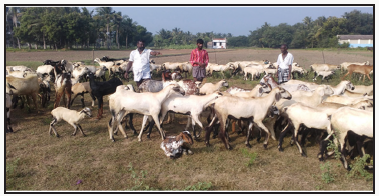
This study was carried out during the period between November 2015 to November 2016 in the Cavery delta districts of Tamil nadu, India. These delta districts are the rice bowl of Tamil nadu state and accounts for 75% of the state’s rice production. The rice harvesting season attracts the several Sheep shepherds to this area to graze the paddy fields after harvesting. Trans humane sheep flocks having flock strength ranging from 300 to 5000 animals per ownership are common sights in these areas. Each flock may have about 300 sheep 25 goat and 9 cattle (Figure 1). These animals were not immunized against brucellosis and blue tongue and no periodical deworming programs are followed. In fact no organized animal health care is being practiced by such nomadic farmers.
Figure 1: Trans human Sheep flock with shepherd in delta districts of Tamilnadu.
Lupinepublishers-openaccess-Dairy-Veterinaryscience

Choice of Samples

Samples were collected from pregnant non aborted, pregnant aborted, non pregnant ewes and rams. For sample size calculation, expected prevalence of brucellosis was assumed as 20 percent with five percent absolute frequency.

Sampling Methods

Clinical materials like whole blood in EDTA tubes, serum collected in clot activator tubes aseptically and stored in refrigeration until further processing. Simple random sampling method was used for sampling.

Brucellosis Screening

Clinical samples like serum samples were collected and submitted for Brucellosis, Blue tongue, Chalymidiasis, Malignant catarrahal fever and Bovine viral diarrhoea diseases since the season and clinical history had given clues for such pathogens. Rose Bengal plate agglutination test (RBT) and I ELISA tests undertaken for brucellosis identification.

Blue Tongue Screening

For blue tongue identification, whole blood in EDTA was collected and subjected to polymerase chain reaction.

Bovine Viral Diarrhoea (BVD) Malignant Cattarhal Fever (MCF) and Chalymidiasis Screening

Serum samples were collected aseptically and analyzed by nested PCR for BVD and MCF. Serology was carried out for Chalymidiasis.

Test Protocols

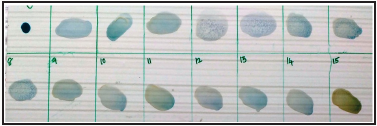
Rose Bengal plate agglutination (RBT) was carried out as per the OIE prescribed procedure. The recommended steps to improve sensitivity of RBT by using three volumes of serum and one volume of antigen (e.g. 75μl and 25μl, respectively) in place of an equal volume of each (Figure 2) This was used in this study modification helped in increasing RBT sensitivity and minimized the discrepancies between RBT and other diagnostic tests. Positive serum and antigen purchased from Indian Veterinary Research Institute (IVRI), Bareilly, India was used in this study. Monoclonal based blocking ELISA for diagnosis of brucellosis was adopted as per the manufactures protocol. For Blue tongue Polymerase chain reaction was adopted as per the standard procedure of OIE.
Figure 2: Modified Rose Bengal plate Agglutination Test.
Lupinepublishers-openaccess-Dairy-Veterinaryscience

Results

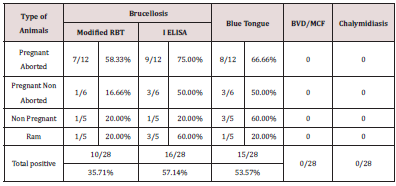
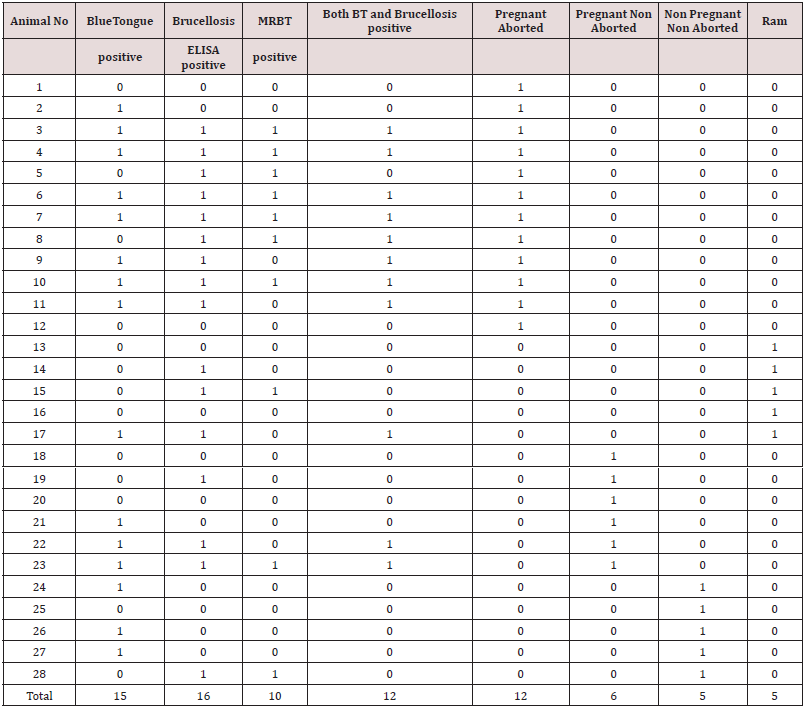
The trans humane sheep population had a clinical history of inconsistent abortion, pooer birth weight of lambs and higher mortality among lambs. Upon screening of 28 clinical samples 15 samples were confirmed as blue tongue with percentage positivity of 53.57. For Brucellosis, out of 10 (35.71%) animals tested by RBT and 16 animals tested by I ELISA (57.14%) were positive for Brucellosis. Out of 12 pregnant aborted animals studied 8 (66.66%) were positive for blue tongue and 7 (58.33%) were shown positive for brucellosis (Table 1) In pregnant non aborted animals, out of the six animals studied three were positive for blue tongue and none of these were positive for brucellosis. Out of five bucks screened, one was positive for blue tongue and two were positive for brucellosis. In non pregnant non aborted animals three and one animals were positive for blue tongue and brucellosis respectively (Table 2). None of the animals were positive for malignant catarrhal fever, Chalymidiasis and Bovine viral diarrhea.
Table 1: Comparison of RBT with ELISA.
Lupinepublishers-openaccess-Dairy-Veterinaryscience
Table 2: Comparison of RBT with ELISA.
Lupinepublishers-openaccess-Dairy-Veterinaryscience

Discussion

Brucellosis and its mode of transmission were known for over 100 years still, the disease remains inconsistent pandemic, predominantly in developing countries. This study analyzed the cause for in consistent abortion in trans- humane sheep flocks of delta regions of Tamil nadu, India. These sheep flocks were nomadic in nature and following flock matting system. They used to exchange their breeding rams with each other over the period of time. The results of the study indicated that 53.57 % of animals were positive for blue tongue and 57.14% were having antibodies for brucellosis which underscored that the incidence was quiet high. Many previous studies had documented it and had an increasing trend [9,10]. The results from this study indicated that brucella antibodies are widely distributed throughout the flock. Since the flock was not immunized in their life time, presence of antibodies directly correlated to the active infection. Prevalence seems to be higher than the overall country seropositivity (13.5%) in Sheep [11-13]. Indirect ELISA showed higher positivity (57.14%) than RBT (35.71%) which indirectly revealed the sensitivity of these tests (Table 3). More over Monoclonal based blocking ELISA for brucellosis detects the antibodies with traces and LPS coated on the ELISA plate has highly homology of the field variant and showed higher titer value (Figures 2 & 3) Conventional Rose Bengal plate agglutination test detects only IgM and is less sensitive, where as ELISA detects both IgM and IgG antibodies which attracts higher sensitivity [2]. Inconsistent abortion was recorded in this flock indicated that it could be the “chronic Brucellosis form”. Rams played vital roles in the transmission of Brucellosis here since higher number (60%) of them showed seropositivity for brucellosis.
Table 3: Categorization of screening tests and positive for Brucellosis and Blue tongue.
Lupinepublishers-openaccess-Dairy-Veterinaryscience
Figure 3: Higher Brucella IELISA titre of Sheep samples.
Lupinepublishers-openaccess-Dairy-Veterinaryscience
In India mostly the sero positive animals were handled based on “test and separate” policy rather than the “test and slaughter” policy due to economic concerns of these marginalized nomadic people. Unplanned immunization program coupled with no effective quarantine and uncontrolled trans-state migration of animals are major factors that affects the Brucellosis control programs [9]. Host susceptibility is also variable with the reproductive status. Thus in the field level, all intermediate stages between typical acute infection to complete resistance may be observed. Under pregnant aborted animals category 58.3% and 66.66% animals showed positivity for Brucellosis and Bluetongue respectively and this highlighted that there is certain confounding effect which makes the animal to abort. In pregnant non aborted category lower percentage of animals showed positive for both Brucellosis and Bluetongue which further supports the possibilities of confounding phenomenon augmenting abortion feature. Interesting by aborted animals got pregnant in their next season and gave birth to normal lambs possibly many animals may develop self limiting infections or they become asymptomatic latent carriers and turn in to potential source of future infections. Abortion generally does not occur if the female is infected at the last stage of pregnancy. Non pregnant non aborted animals showed higher Blue tongue positivity than brucellosis which enlightenend the real risk factor for abortion. Non-pregnant animals exposed to small numbers of organisms may develop selflimiting, immunizing infections or they may become latent carriers [12,13]. No proper selection of breeding ram between flocks of Sheep, low /no biosecurity measures, poor awareness about the vaccination had resulted in brucellosis becoming a continuous threat to the trans humane Sheep populations. As 60 % of rams, showed seropositivity for brucellosis, they posed a great threat to the breeding ewes. Interestingly non of the rams showed clinical signs of Brucellosis. Asymptomatically infected rams deserve to have poor fertility and contributes to dissemination of B. ovis and when very high percentage of rams were infected marked infertility becomes evident in the flock [14]. Seroconversion and shedding of bacteria in the semen of infected rams demonstrated mild or no detectable lesions during the acute phase of infection [15].
The study period of October month had a higher culicids’ populations and it in turn would have helped in transmission of Blue tongue. Results here indicated that BTV is epidemiologically important, and further studies are required to determine the true spatial distribution and cause for abortion in Sheep. Unplanned and uncontrolled grazing and frequent addition of flocks of sheep also contribute to the wide distribution of brucellosis in these animals. Even though the goat and cattle reared along with sheep flock, they were not part of this study, however they may had also acted as a cofounder for Brucellosis. Future studies on these aspects will add more information.


Ultrasonic Debridement with Stem Cell Therapy of Suspensory Branch Desmitis in an Equine Patient

Abstract Ultrasonic debridement as a treatment for tendinopathy and desmitis is a relatively new approach in orthopedic surgery. Previousl...